This week we learn about Microbial Groups, Principles of Ecology and a bit intro in Biogeochemical Cycles.
MICROBIAL GROUPS
* Microbial growth is based on the population size an interrelated with reproduction (binary fission, budding, fragmentation, spores, sexual reproduction)
* Requirements for development of microbial community
1) Physical requirements
- light
- temperature
- pH
- water activity and osmotic pressure
2) Chemicals requirements
- water
- carbon
- oxygen
- nitrogen, phosphorus and sulfur
- special growth requirement
- trace elements
* Developement of microbial communities
- selection strategues
- succession
- biofilm
PRINCIPLES OF ECOLOGY
Ecology
- the systematic study of organisms and their interactions with environment
Habitat
- place where an organism can be found
Ecological niche
- a place where an organism performs best
Hierarchy in ecology
1) organism
2) population
3) community
4) ecosystem
Determinants of biosphere distribution of organism
- temperature
- water
- sunlight
- wind
- rocks and soil
- periodic disturbance
Homeostasis
- dynamic balance of processes, materials and organisms in the ecoystem and biosphere
Flow of energy
Producers --> consumers --> decomposers
Roles of microbes in the ecosystem
- oxygen producer
- nitrogen fixer
- recyclers of dead materials
- source of food
- contribute to evolution
Approaches to effective ecosystem management
- stakeholders
- adaptive management
- natural resource management
- strategic management
- lanscape level conservation
- command and control management
Wednesday, 27 May 2015

Tuesday, 19 May 2015
ALGAE, FUNGI, PROTOZOA and VIRUS
Week 11
We have three class for this week. On Wednesday, Thursday and Friday. We learned four topics and we did an activity on Friday using new interesting apps.
My group (MayLing, Veron, Nuaim, Azny, Alia) and I presented about algae on Wednesday. Basically, algae is a plantlike protista and have many different division; chlorophyta, charophyta, euglenophyta, chrysophyta, phaephyta, rhodophyta, phaephyta and pyrrophyta. They live in three types of habitat which a planktonic, benthic and neustonic. Algae is either phototrophic or chemoheterotrophic. They reproduce through asexual (fragmentation, spore, binary fission) and sexual reproduction. Nowadays, algae is highl y used as a source of biofuel.
Fungi are a very interesting organism. They do not have chlorophyll and most of them are saphrophytes. They reproduce mainly using spores. However, many of them can have both sexual and asexual reproduction (budding, fragmentation, sporulation). There are 5 types of spore which a conidiospore, chlamydiospore, sporangiospore, arthrospore and blastospore. As same as algae, fungi also have many different division. The divisions are zygomycota, ascomycota, basidiomycota, chytridiomycetes, deutromycota, myxomycota, acrasiomycota and oomycota.Fungi can cause harmful to human such as ringworm and asthma but, they are more likely to be beneficial to us as they are really important in fermentation process and agents for bioremediation.
Protozoa are animal-like protist. Their morphology is very unique as they have ectoplasm, endoplasm, pellicle, nucleus and vacuoles. They feed as a chemoheterroyroph and saprozoic. They are motile and have pseudopodia, flagella and cilia as their locomotry organelles. They reproduce through asexual (binary fission) and sexual reproduction (conjugation). They are classified into seven clssification based on types of nuclei, mode of reproduction and mechanism of locomotoin. THe classifications are sacromastigophora, labyrinthomorpha, apicomplexa, microspora, ascetospora, myxozoa and ciliophora.
Virus are obligatory intracellular parasite which means they need a living host to grow. They are classified based on nucleic acid type, strategy of replication and morphology. They can have either DNA or RNA, double or single stranded. Usually, they have capside, spikes and envelope which attach to cell wall, fimbriae or flagella of bacteria and plasma membrane of animal cells. Baed on the morphology, they are classified into enveloped, complex, helical and polyhedral virus.
On Friday, we used edpuzzle.com to create a quiz in a video. It is very interesting and also a new form of attractive learning.
Friday, 17 April 2015
7 WEEKS LESSON WITH DR. SIEO CHIN CHIN
The first class of BMY3102 was on
Wednesday, 25th February. Differ from the last semester, we have two
lecturers for this course. The first one that taught us was Assoc. Prof. Dr.
Sieo Chin Chin. We learned two topics with her, which are Nomenclature and
Classification and Immunology. Her class was very enjoyable and I also learned
a lot. Here, these are the summary of the lessons…
Nomenclature
and Classification
Taxonomy : 1. Nomenclature – assignment of
names to taxonomic groups in agreement with
published rules
2. Classification - arrangement of organism into taxa based on
mutual similarities or
evolutionary relatedness
3. Identification – process of
discovering and recording the traits of organism.
1.
Nomenclature
§ Common rules in nomenclature
-
Binomial nomenclature (genus +
specific epithet)
-
Both underlined or italicized
-
Genus capitalized, species
lowercase
-
Genus may be used without
species
-
Abbreviation : Escherichia coli
E.
coli
Enterococcus faecalis (En.faecalis)
Escherichia coli (Es. coli)
§ Process of naming new bacteria

§ Ways to describe strain
-
Biovars: strain characterized by
biochemical or physiological differences
-
Morphovars: differ morphologically
-
Serovars: distinctive antigenic
properties
*Type strain – first
strain studied and is more fully characterized but not necessarily
the most representative member
2.
Classification
CLASSIFICATION SYSTEMS
PHENETIC PHYLOGENETIC GENOTYPIC
- Numerical - 16S rRNA - Other
taxonomy - Phylogenetic molecular
(SSM & SJ) tree methods
-
Dendogram
3. Identification
TECHNIQUES/METHODS FOR
CLASSIFICATION/IDENTIFICATION
CLASSICAL
- Morphological
(staining, external structure, cell inclusion, cell grouping)
- Physiological
and metabolic
- Biochemical
- Ecological
- Immunologic
test
- Phage
typing
- Antibiotic
profilling
MOLECULAR
-
Amino acid sequencing
-
Nucleic acid base composition (%GC
by HPLC and Tm)
-
Nucleic acid hybridization
-
Nucleic acid sequencing
-
Genomic fingerprint (MLSA, RFLP,
ribotyping)
-
Nucleic acid probe
-
Plasmid fingerprinting
*Assignments

Bergeys Manual

Introduction to Immunology
*the topic that I love >,<
Immune system - defense system of individual against the thread of disease caused by infectious microorganism
Pathogen can be harm when : gain access through the right roots
- attach to host cells
- persistence and evade to produce harmful changes
Organs of immune system - Primary lympoid organ
- production of immune cells
- maturation site for immune cells in the absence of antigen
- e.g: bone marrow, thymus, bursa of Fabricius
- maturation site for antigen-driven immune cells
- e.g: adenoid tonsil, lymph nodes, MALT

Types of immunity - non-specific immune response
- external - skin
- normal microbiota
- internal - physiological barrier
- - phagocytosis
- inflammation
- specific immune response
- humoral
- cell-mediated
has immunoglobulin (recognized undigested antigen)
- T cell : mature in thymus
has TCR (recognized processed antigen on MHC
molecules on APC
Features of good antigen - high molecular weight
- foreignness
- complexity
- biodegradable
Antibody - IgG, IgA, IgM, IgD, IgE
Humoral immunity
- How antibody gives protection

- Antibody response
- Primary (latent period)
- chemical and physical nature of antigen
- adjuvants
- dosage of antigen
- frequency of antigen exposure
- routes of administration
- genetic makeup of host
- Secondary - rapid increase in antibody titer
- shortened latent period
- higher titer

Cell-mediated Immunity - CD8 cytotoxic T cell
- Stages in granule exocytosis
- recognition and binding of target cells
- delivery of lethal hit
- death of target cells
- recycling of cytotoxic T cells
- Aims
- recruit monocyte
- keep monocyte/macrophage at infection site
- activate monocyte and macrophage
- Reaction
- activation of CD4 T cells
- migration of effector Th cells
- recruitment and retentation of monocyte
- activation of macorphage


Memories~


Friday, 19 December 2014
Last Class...
Friday, 19th December 2014
Sobs sobs :’(
The very last lecture is today. Time flied too fast
until we didn’t realize more than 3 months has passed. This is very sad.
But, lesson has to going on. We learned more about “Control
of Microbial Growth” and also a new last topic which is “Antimicrobial
Chemotheraphy”. This topic needs us to memorize many things as well. Fuh~
Around another two weeks we will sit the final exam for Microbiology and I don’t
sure I can do this. Even when we play quizzes in Kahoot.it , I couldn't answer much. Huarghh HELP ME!!!
Sigh :(
Thursday, 18th December 2014
Today in microbiology class, we learned some calculation
which I don’t like it. We calculated number of generation and also generation
time.
No. of generation = [ log no of cells(end) – log no of cells(beginning)
] / 0.301
Generation time = 60 min x hours / no of generation
Dr. Wan also gave us exercise about this part and we
have to submit it. I took quite a long time to calculate it hehe. But, I still
managed to submit it on time.
Next, we learned a bit about “Control of Microbial
Growth”. There are so many terms to remember which I couldn’t imagine how I
gonna memorize all that. *Sigh*
A FEW DAYS MORE~
Tuesday, 16th December 2014
Another few days left before this semester end. Hmm...
Today we continued our lesson on isolation/culturing, mantaining and preserving microbes.
Sunday, 14 December 2014
New Things and New Terms to Remember :(
Wednesday, 10th December 2014
Today was a replacement class actually and we have it in Biotech 2.2. We moved into a new topic today but before that, as Dr. Wan promised she did a quiz for all of us according to the group. The quiz was based on the topic that we just finished yesterday. My group only get 5 marks out of 10. Hmm it's bad and I didn't helped much at that time :(
So, the new topic was Microbial Growth. I have printed the note and I wondered why the note was so thick? Is it going to be a long and hard topic? When I checked, it was full with pictures of experiment that has been done by our seniors and we also going to do the same experiments later. These help me to get to imagine how the microbiology lab subject will be going on.

Today was a replacement class actually and we have it in Biotech 2.2. We moved into a new topic today but before that, as Dr. Wan promised she did a quiz for all of us according to the group. The quiz was based on the topic that we just finished yesterday. My group only get 5 marks out of 10. Hmm it's bad and I didn't helped much at that time :(
So, the new topic was Microbial Growth. I have printed the note and I wondered why the note was so thick? Is it going to be a long and hard topic? When I checked, it was full with pictures of experiment that has been done by our seniors and we also going to do the same experiments later. These help me to get to imagine how the microbiology lab subject will be going on.
Microbial Growth
Growth - refer to number of cell, not the size
Tolerance - survive under condition that they cannot grow
Phile - Specific conditions to grow
Tolerant - conditions which organism survive, but not necessarily grow
Physical requirements -
1) light
2) temperature
3) pH
4) water activity
5) osmotic pressure
Chemical requirements -
1) electron donors
2) electron acceptors
3) micronutrient
We did not finish this chapter yet and will be continue it next week. Besides, Dr. Wan also mentioned about something interesting that I have never heard before.
Here it is!
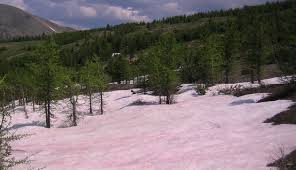
Red coloured snow
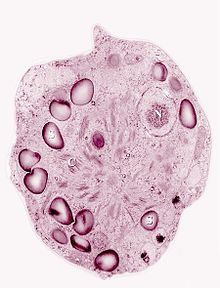
Chlamydomonas nivalis
Subscribe to:
Comments (Atom)